
I am told, “No good deed ever goes unpunished.” While this thought may seem true from time to time, I am very pleased to have volunteered to coach my daughters’ flag football team. I have had the pleasure of coaching my boys’ football and soccer teams, even being an adult leader in their scout troops. My wife had the pleasure of coaching our girls, but I have never had an opportunity to share the love of sport and competition with my girls.
The boys and I share many funny stories and a common experience from the intersection of our relationships as parent/ child and coach/ player. The girls and I are looking forward to deepening our relationships through playing flag football and I am especially happy both the girls will be on the same team.
The NFL has partnered with local school districts in Alaska, California, Florida, Indiana, Massachusetts, Nevada, New Jersey, Pennsylvania, and Texas. The idea of this partnership is to provide another opportunity for girls to develop leadership skills, and to play a sport in which female participation has been limited until now.
The NFL grant of 2008/9 agrees to pilot flag football programs in any community desiring such a program. So, if you wish to bring flag football to your school you can go to the NFL youth football website and apply for the grant the NFL has set up to provide footballs, flags, rulebooks and other support to get leagues started. Florida already has a state championship, Texas is investigating one and talk has begun as to developing some kind of national tournament. The upside for the NFL is they are expanding the numbers of female fans, both now and in the future.
While these opportunities on the horizon excite the girls, the thought of playing a “boy’s sport”, and breaking those barriers and stereotypes, holds as much attraction for my girls and their teammates, but biggest attractor is the sport itself. Several of the girls on my team are cheerleaders for their school, cheering for the boy’s football and basketball teams. Interestingly, high schools that have had girl’s flag football for a few years report that boys come out to cheer on the girls; demonstrating, either boys are willing to be fair-minded about their sports, or boys will go where girls are even if the girls are cutting fish bait.
The girls play seven on seven, and as they do not wear tackle football pads, the rules are modified to ensure the girls’ safety. The pace of the game seems to be faster than tackle football and the ball is smaller to accommodate the girl’s smaller hands. I have however been pleasantly surprised by how quickly the girls have begun to master their new sport.
I am very interested to see the differences in levels of competitiveness, if there is any, both inside our team between individual girls, and between boys and girls in general. Far more important than satisfying my considerable intellectual curiosities however, is the opportunity to play a sport with my girls that all three of us love.
Mark Altman is a speaker and leadership consultant with the Altman Leadership Center. He has graduate work in Marriage and Family Counseling and is working on a PhD in Leadership studies at Gonzaga University. He can be reached at mark@taolc.com.
Saturday, April 4, 2009


Thursday, April 2, 2009
One Step Forward, Two Steps Back
“Difficulty is the excuse history never accepts.” – Edward R. Murrow
Virtually everyone comes upon difficult periods in their lives, usually several times over the course of a lifetime. In fact, many authors would argue these difficult periods, and instances of failure, are necessary to an overall lifetime of success. On the main, history bears out their argument, with Bell, Edison, Lincoln, and Roosevelt, being the first four examples I can rattle off the top of my head.
While I wouldn’t go so far as to suggest any of us enjoy these periods of painful instruction, I am suggesting we have two options when faced with such obstacles. The first option is to give up. In our nation, we typically look upon such people with scorn while shaking our heads sadly. Instead, I argue every goal has a price and we should always evaluate the personal and societal costs against the personal and societal benefits. We should reevaluate why we are pursuing a particular goal when the costs begin drastically outweighing the benefits.
The second option is to take a step back, and a deep breath or two; then evaluate the goals in our lives, make corrections and move forward with renewed vigor. This second option has the virtue of allowing us to learn from our mistakes; however, with either option we should move forward only when we can do so with purpose.
After you have decided to take an opportunity to reevaluate where you are, doing so in a systemic way, writing down the results for further reflection and as a “compass check” in the future, is usually of invaluable aid. Figuring out in broad or philosophical terms what is most important to you and then developing goals that fit into that framework is a huge step forward. Take care not to believe you have carved these goals into stone; you can, and probably will change your goals from time to time as life circumstances change. The important part is to have some kind of plan, imperfect, incomplete, and changing as it may be.
Try to group your goals under the following headings: spiritual, service, family, physical fitness, career/financial, education/self improvement, and battery charging or fun goals. These are the basic areas of life for most people and allow for a balanced, healthy view of life. Writing down the goals provides a method for deeper planning to accomplish the goals, keeping track of them, and making it possible to check off the goals when they are achieved.
Reviewing the list frequently can help keep you on task and allows loved ones to help us as needed. In addition, being able to see a goal checked off the list can be a powerful feeling, providing a dose of resilience during difficult times.
I suggest this as a powerful tool in what may be the worst economic environment our nation has faced since the Depression. Not only will the tool help you directly but can help your family discover their common purpose, and remind them of it during trying times. I leave you with the thoughts of William James, “The greatest discovery in our generation is that human beings, by changing the inner attitudes of their minds can change the outer aspects of their lives.”
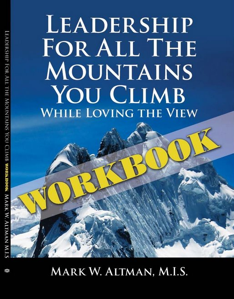
Mark Altman has graduate work in Marriage and Family Counseling and is working on a PhD in Leadership studies at Gonzaga University. He is the author of the book Leadership For All the Mountains You Climb, is available for speaking or consulting and can be reached at mark@taolc.com.
Friday, March 6, 2009
Sibling Rivalry
I am the oldest of my parents’ four kids. I have a great relationship with one brother and my sister, but my other brother and I have always had a love/hate relationship. After years of self analysis, I can safely say the crux of our problem is sibling rivalry. I would love to be able to blame it all on him, but the fact is it takes two to tango as they say.
I have been amazed at the passion with which friends and family have weighed in on the issue of sibling rivalry. With the obvious exception of only children, It seems that almost everyone has been affected, in some cases scared, by overdone competition between siblings. Many family health experts believe sibling rivalry is more common in children of the same gender and if they are close in age.
Wondering how well my wife and I handled the issue, I called my oldest son to get his opinion of the relationship he and his siblings enjoy. I figured he more likely an honest broker as he is in college and away from home. He reported that he and his siblings compete all the time but they kept it behind the scenes, as they know Dawn and I try to keep the rivalry to a minimum. He argues sibling competition is good as long as the rivalry is kept inside ethical boundaries and is not allowed to overtake the whole of the relationship. He believes the friendly competition has made each of them better while they have stayed supportive of each other’s successes.
In the spirit of making myself a better parent and helping the many of you who have shared your challenges with me in this area, allow me to pass along the fruits of my research:
The family meeting has a role to play keeping sibling rivalry healthy, if you take an evening to gather input on how your family feels about the issue, how they believe the family is faring, resolving conflict in a healthier way, and getting buy-in on strategies to move forward.
Take the time to explain that “fair” and “equal” are not always the same thing and standards are not always consistent. For example, you may expect “straight ‘A’s” from one child and yet “C’s” from another. Fairness derives from expecting the same effort from each child and them to try their best.
Accordingly, finding each child’s talents and expecting the entire family to celebrate everyone’s success is key. At the same time, expecting the entire family to help others with their challenges is important too.
Another tool in reducing destructive rivalry is to do fun, family activities together. Simple things like game night should be a weekly event, and monthly embarking on a more involved activity like camping or a road trip to a museum.
While activities with the entire family is indispensible, individualized activities such as “date-night” are just as helpful. A “date” of one parent and one child doing something they want to do provides many benefits and special memories.
I wish you all luck in minimizing family rivalries and nurturing compassion, commitment, love and understanding that will last a lifetime.
Mark Altman is a speaker and leadership consultant with the Altman Leadership Center. He has graduate work in Marriage and Family Counseling and is working on a PhD in Leadership studies at
Friday, February 27, 2009
Conflict Resolution
This week we have seen truly historic events in the stock market causing everyone from wealthy Wall-Street types to those of us with more modest means no small amount of concern over where our economy is headed. I should state at the outset that I am not, nor do I wish to be, an expert in either economics or financial planning; however, I wish to pass on some tips to help families get closer and maybe save a little money at the same time.
Until the 1950’s, entertainment in the family was largely of our own making. Many people played musical instruments or sang, and parlor games of all types were popular. In the 50’s movies became much more affordable to most people and of course TVs found their way into every home. From the 1990’s until now, the number of electronic devices in our homes and the amount of extracurricular events for school-agers has increased exponentially. These have had the effect of greatly diminishing the amount of time families spend together.
The economy, for all the negative effect people have seen and are likely to see, may have the positive effect of bringing us all closer to home for a time. I suggest we use this time wisely, but if we are to do that please keep these things in mind:
1. The stress you are feeling is felt by everyone in your family and is best dealt with by getting plenty of rest, eating healthy, and getting more exercise, but mainly talking about the challenges you face as a family.
2. There are inexpensive alternatives to going to the latest blockbuster, TV, and the Internet; such as popping popcorn and watching a movie at home, doing a family art project or just looking over old family pictures and telling the stories that go with those pictures.
3. If that is not enough interaction for you, then how about picking a classic play by Shakespeare, Arthur Miller or any other favorite play that has a few parts. You can simply read the play with everyone taking a part or you can actually act it out.
4. I have suggested you hold family meetings every week or so, and during difficult times these meetings are even more helpful. I am not suggesting unloading parental budgetary problems on the elementary age kids with the admonishment, “Sell more pencils on your corners kids!” However, an age appropriate conversation about national economics or even scaling back on family spending and reassuring your kids that finances have been tough before but everything will be fine can certainly be helpful.
Crisis tend to either pull us apart or pull us together no matter what organization we are in; work, family, community, etc. One of the biggest factors in the direction we go is how directly, how honestly, and how compassionately we talk to each other. Make this a time all of you look back and remember a time when your family pulled together and became closer.
Mark Altman is a speaker and leadership consultant with the Altman Leadership Center. He has graduate work in Marriage and Family Counseling and is working on a PhD in Leadership studies at Gonzaga University. He can be reached at mark@taolc.com.
Friday, February 20, 2009
Birthdays in the Age of Facebook
My 44th birthday was last week and I received over 100 well wishes and birthday cards. Some of these kindnesses came from relatives, friends, old Army buddies and former high school classmates I haven’t seen in 25 years. I am grateful to each of them for remembering me in their busy lives. I will say this task is made a good bit easier for all of us, now that the social networking sites are all the rage.
A quick word of caution is in order: I realize these sites have a downside, especially for kids who are allowed unsupervised access to them. I would no more suggest unsupervised Internet access to kids, than I would suggest handing a teenager car keys without providing Driver’s Ed and a lot of supervision. On the upside, you can share everything from new baby pictures, family vacation videos to an electronic birthday card, which brings me back to the point of my column for the week.
As I mentioned, my birthday was last week; and while my birthday has never caused me any consternation, I do enjoy hearing well wishes from family members and friends, new and old. Having birthday cake and ice cream around the house for a few days is certainly welcome as well. While we haven’t figured out how to send each other cake and ice cream over the Internet, social networking sites are a great way to pass on, as well as receive, greetings and updates.
In our current society, there are very few of us who have both our immediate and extended families close by, and when you include close friends accumulated over the years, the chances really go down. Because of my military career and extensive travelling, I have friends on every continent except the Arctic and Antarctica, so keeping up with them has become much easier thanks to the networking sites. In addition, as a speaker and consultant I keep in touch with business contacts on these sites as well.
Of course, you may find a downside in that you can never live down throwing up in science class in high school, too much partying in college, or any number of other minor transgressions and embarrassing moments. The upside is these stories, told in and outside our families, serve to provide a backdrop for our story in relationship with each other.
On the whole, I have tried diligently to address the shortcomings I perceived in my character while I was growing up, especially in high school. However, over the week leading up to my birthday I was very pleasantly surprised to find that a few times I managed to rise above the all too often immature, selfish person I was, to actually have a positive impact on the life of a friend or family member. It is unlikely any of these people would have told me in any media other than a message over the Internet.
Our lives, individually and sociologically, are changing at an ever-increasing pace; and while raging against the storm has its own virtue, I maintain technology is a tool that can benefit us or hurt us depending upon how skillfully the tool is used. I encourage you to view these sites as a wonderful tool to cut the time and distance that societal demands too often necessitate. Besides, the website’s calendar feature will earn you brownie points with your Mom when you remember not just her birthday, but Aunt Agnes’ birthday as well.
Mark Altman is a speaker and leadership consultant with the Altman Leadership Center. He has graduate work in Marriage and Family Counseling and is the author of Leadership For All the Mountains You Climb. He can be reached at mark@taolc.com.
Monday, February 9, 2009
Valentine's Day- Cupid's Second Arrow
“Love may make the world go round, but it is romantic love that makes the ride worthwhile.” – Gary Godeck
With Mr. Godeck’s encouragement, we begin. As I pointed out last week, according to Dr. Chapman, there are five love languages: physical touch, words of affirmation, acts of service, quality time, and gift giving. This week I am going to provide some ideas for each gender for each of the love languages, but before we go further, it is important to figure out which love language your lover hears.
One way to figure that out would be to do the questionnaire in Dr. Chapman’s book, but if that isn’t possible on such short notice, then you can think back to the reactions you might have received in the past with other romantic gestures. In the event you have do not have experience to rely on, then use that as an excuse to try one idea from each category.
The first love language we will look at is the one most of us think of at Valentine’s Day: gift giving. You could just give flowers or candy, but let’s borrow a line from Emeril Lagasse and “Kick it up a notch”, not in terms of cost but merely in thought. So instead of just buying flowers, buy an assortment of specialty teas or coffee to warm her tummy the way she warms your heart. Buying him something for a hobby and arranging for him to have the time to use the new thing you bought is always a winner.
The next love language is words of affirmation, meaning say nice things to and about your partner. In this case, find one of Shakespeare’s sonnets and copy it in your own hand with a note at the bottom. Or write a letter patterned after the Civil War letter by Sullivan Ballou; easily one of the most romantic letters ever penned.
Physical touch is often mistakenly limited to sexual intimacy. My example here, for him or her, is to arrange an evening of soft music, low light, a platter of fruit, wine if you like (and are of legal drinking age), and a warm bottle of massage oil.
Acts of service usually are the easiest to come up with, but are sometimes the hardest to actually pull off. If you perform an act of service, it ceases to be service if you demand, or even ask for, something in return. Especially if you have children, preparing your wife a relaxing bath with scented candlelight and a favorite book or music while you take care of the evening’s chores such as post dinner kitchen cleanup is always a hit. Ancient wisdom says, “The way to a man’s heart is his stomach” (or six inches lower), so servicing either or both of those desires fits the bill. Of course, this is assuming whatever you do isn’t at the expense of your responsibilities, you do not ask for anything in return, and it is done in a loving and cheerful spirit. See, it’s harder than it seems!
Last, but certainly not least, is quality time. This is spending time with your beloved, doing something they like to do, without answering a cell phone, email or watching TV (unless your partner wishes to watch something together, such as a movie). A better Texas answer is to roam the streets of Old Town Spring or Fredericksburg, or a weekend at a bed and breakfast. There are several local places you can do this quite reasonably.
Eloquence in the love languages and being romantic, come through practice and asking for kind feedback on your efforts. You won’t hit a homerun every time, but you will get better and it will be easier to identify romantic opportunities. “There isn’t any formula or method. You learn to love by loving.”- Aldous Huxley
Mark Altman is a speaker and leadership consultant with the Altman Leadership Center. He has graduate work in Marriage and Family Counseling and is the author of Leadership For All the Mountains You Climb. He can be reached at mark@taolc.com.
Thursday, February 5, 2009
Cupid's Friend
“Any time not spent on love is wasted”- Torquato Tasso
We have once again come to that time of year that causes sweaty palms and makes men quail at the daunting task before them, and no, I’m not talking about figuring out what to do on a weekend without either hunting or football. I’m referring to what might be the most feared holiday of them all: Valentine’s Day.
I am going to write this week and next about this holiday and provide some help for those of you who either don’t observe Valentine’s Day, or those who every hope for that magical reaction when they hit their partner’s heart with Cupid’s arrow, only to find every year they are wide of their mark. For most of us, initially our crazy lives trump our desire to be more romantic, then over time we get out of practice and become embarrassed of our failure to treat our beloved the way we should. Instead of correcting our behavior, we attempt to convince ourselves the holiday, and its trappings don’t matter, eventually coming to believe that romance itself is unimportant.
Valentine’s Day has become a huge moneymaker for card companies, florists, and undergarment companies, to the tune of 17 billion dollars. For this reason many people are soured on this wonderful holiday much in the way we lament the commercialization of Christmas. I argue we shouldn’t throw Cupid out with the bathwater so to speak. Just because others commercialize the holiday is no reason we can’t use the day as an excuse to show our beloved how much we love and regard them.
The day used to be one primarily of men giving women cards and little gifts but with greater equality for women in society, a greater percentage of women give the object of their affection gifts as well. In keeping with this change in society, I will offer some thoughts for both men and women.
In many ways, Valentine’s Day is not so much about love as it is about romance. Romance may best be thought of as love in action, so Valentine’s Day is a day to EXPRESS your love. By now you are thinking, “But I don’t write well or speak eloquently like you do Mark”. Hey cut me some slack, there could be someone, somewhere, thinking it. On the off chance you are one of those people, let me provide some help.
Dr. Gary Chapman wrote The Five Love Languages, and in this book he proposes there are five ways each of us “speak” and “hear” love. These love languages are (in no particular order): physical touch, words of affirmation, acts of service, quality time, and gift giving. You will notice that only one of the love languages, gift giving, costs money. If you are on a budget, or you are conducting a one person protest against commercialization, then speak one of the other love languages.
The point for this week is not which love language you speak, but the importance of speaking one or more of them. Valentine’s Day is both an excuse and a reminder to do something nice for someone that does nice things for us. Next week we will explore the love languages and I will provide some suggestions for each language on the big day. Stay tuned!
Mark Altman is a speaker and leadership consultant with the Altman Leadership Center. He has graduate work in Marriage and Family Counseling and is the author of Leadership For All the Mountains You Climb. He can be reached at mark@taolc.com.
Friday, January 23, 2009
Love and Logic- A Parental Oxymoron?
Last week, I began a parenting class called Love and Logic developed by Jim Fay and his son Charles Fay, PhD. And Dr. Foster Cline. The course is a seven week deal and in week one I have already found a few things to think about and at least one tool to put in my parenting tool bag. Many of you that know me (or read my column regularly) know that I have four kids and that they are, as of my writing this, 18, 15, and 14 year old twins.
As such, you may be asking yourself why am I taking this class when, for the most part, the die has been cast when it comes to the raising of my kids. First, I argue that you never know what I may learn to help me with putting the finishing touches on the successful, well adjusted adults I hope to turn loose on society in the next couple of years. Second, I will have grandkids one day, hopefully not in the next decade as everyone still has college and graduate school yet, but one day I will become a parenting coach to my kids and I wish to be a good one. Last, but still very important to me, are you my gentle reader to whom I hope to provide valuable, friendly help in your own families.
The class consists of video and written materials that are professionally done by The Love and Logic Institute, and classroom discussion provided by our facilitator, a counselor in the school district my wife works for and the kids attend school. One of the biggest advantages of this program is that corporal punishment, in fact punishment of any kind, is not necessary. Natural consequences are used to teach life lessons while the consequences are small.
For example, the child learns thrift by earning money doing chores in the home and then spending that money with very few limits from the parent. The parent actually hopes for failure, such as the child buying a cheaply made toy that breaks easily. The parent then provides empathetic love, not a lecture, and the child figures out for themselves that squandering a hard earned few dollars on a cheap plastic toy is not something they should do very often. Learning such a lesson with a toy that costs five bucks is far better than buying a first car for too much when that car has a great stereo and a bad motor.
Kids do not come with instructions, or if they do my manual was left out of the packaging… all four times! In addition, parenting changes as society changes; both in terms of challenges and in the definition of success. This means parents should constantly be on the lookout for good ideas and learning from parents who have been successful. While I am not convinced this class will solve all parenting challenges, and I still have a few questions left to be answered, the class has already proven to be helpful and I encourage you to find one in the Conroe or Montgomery County area. The program is popular and you should have little trouble finding one to fit your schedule.
Mark Altman is a speaker and leadership consultant with the Altman Leadership Center. He has graduate work in Marriage and Family Counseling and is the author of Leadership For All the Mountains You Climb. He can be reached at mark@taolc.com.
Tuesday, January 20, 2009
To Forgive and Forget
"The weak can never forgive. Forgiveness is the attribute of the strong." -- Mahatma Gandhi
Every so often I am floored by the actions of someone else. By this I mean a story so attention getting and inspiring, I can’t help but derive a lesson from it. Usually it takes the form of a person who rises so far above themselves and the frail, flawed, nature of who we usually are as human beings, it sucks the air out of me and causes my eyes to tear with the glimpse of what we might be; both as individuals and as a species, if we could just be as Lincoln referred “our better angels” more of the time. Sometimes the person doing the punching is fictional; the author using my buy-in of the character to teach or extol. Only rarely do I get the pleasure of meeting the people who floor me, but I am always the better for the meeting.
This week I was reminded of an incredible story of forgiveness and how that story has and continues to change lives. The story is of Amy Biehl, an American Fulbright scholar killed in 1993 while serving in South Africa. After Amy was pulled from her car, then beaten and stabbed to death, her parents found the capacity to forgive the four men convicted of Amy’s killing, not opposing the amnesty ruling of the Truth and Reconciliation Commission.
Later, the Biehl’s met, and subsequently developed a relationship with, two of the men who were involved in the killing of their daughter. Today both men work for the foundation Amy’s parents started in an effort to use art, economic development, music and sports to continue to work for peace in South Africa. In fact, in accordance with African culture and morays, the two men call the Biehl’s their parents, and during the writing of one article Mrs. Biehl actually went with one of the men to buy a car seat for the man’s young daughter. I am sure I do not have the strength to forgive the killers of one of my family members; my acknowledgement of my weakness only serves to raise my admiration of the Biehls.
In our daily lives, often we are offended by slights big and small; such as when someone cuts us off while driving, or is curt with us in the grocery store. Our inclination is to respond with rudeness for rudeness, insult for insult, temper for temper. Society tends to hold up the person with the biting, quick wit who bests such people in verbal combat and our media entertainment includes the heroism of those who use physical abuse to pay pain for pain.
This is bad enough, but this treatment extends to our marital and familial relationships as well. Because we live with these people, we can think about a stinging retort for the next time we are together. If this damage is not held in check then our loved ones look for a retort of their own and sometimes the capacity to forgive these injuries is larger than we can generate, resulting in permanent damage to these special relationships.
My aim is not to preach or point out the fact that we are all at times, all too human. My fervent hope is these extraordinary stories of forgiveness, love and tolerance will give us pause the next time someone, stranger or loved one, causes us pain; and in spite of ourselves we will find the strength to become, if only for that moment, our better angels.
Mark Altman is a speaker and leadership consultant with the Altman Leadership Center. He has graduate work in Marriage and Family Counseling and is the author of Leadership For All the Mountains You Climb. He can be reached at mark@taolc.com.
Monday, January 5, 2009
New Year's Resolution
The end of one year and the beginning of another is traditionally a time of reflection and evaluation for most of us; this is understandable, especially once a person is old, and mature, enough to recognize the finite nature of life and the desire to accomplish certain things during that life or leave behind something to those who follow. For example, I am still deeply engaged in a search for the perfect root beer float. For those of you also engaged in this critical search; first you must put a glass mug of suitable size and heft in the freezer and secure a good quality ice cream, which is not too dense. You will also need a spoon of about tablespoon size, as you need a spoon big enough to hold both the ice cream and a bit of root beer. We had better put this on hold and get to our resolutions; if you want my recipe, email me at the address below.
I suggest making no more than three resolutions. If you try to do more than a couple at a time, you are reducing your chances of being successful at any of them. Pick one or two you believe are most pressing; working on one health and one life improvement resolution allows you to feel as though you are improving across the broader scope of your life, while still focusing deeply. In my case, I would lose weight and get in better shape, but I spill my root beer float when I get on the treadmill.
New Year’s resolutions can be framed in two ways, capitalizing on what you do well or trying to improve what you are not doing well. In the US, we tend to focus on fixing the things we aren’t doing well or want to stop, but a shortcoming of this way of looking at challenges is we become fixated on the negative. On the other hand, if you focus on capitalizing on what you do well or want to do more, then you are grounded in the positive and focusing on the good in your life.
Obviously, if you are doing something destructive to yourself or others, such as illegal drug use or abusive behavior, then getting help stopping that behavior immediately is important. However, if you are eating too much for example, but enjoy bike riding, or snowshoeing, then joining a bike riding club or taking advanced snowshoeing lessons will increase how much you engage in those activities, provide more exercise, and thereby help you lose weight. This would be an example of focusing on the positive and is called appreciative inquiry.
After you decide on your resolutions and frame them in the manner most comfortable to you, write them down! Then break up the resolution into manageable, preferably daily, bites. This helps make your resolution a habit and allows you to track success.
Tell others of your resolutions so they can support you, and surround yourself with those who will provide loving support. Make sure you kindly make suggestions to your family and friends so they know how to support you better. Be sure you are a good friend and provide them the kind of support they want in achieving their resolutions as well. If they cannot be supportive, you may have to make changes in the friends you spend time with.
Last, realize that failure is only failure when you quite trying. I do not believe this to be just a trite saying. Most smokers for example have to try four times or more before quitting smoking. Many people have to start exercising several times before it becomes a habit.
We have to leave this for now, as I have run out of room and I have to go get some root beer. Have a wonderful new year full of possibility and promise!
Mark Altman is a speaker and leadership consultant with the Altman Leadership Center. He has graduate work in Marriage and Family Counseling and is the author of Leadership For All the Mountains You Climb. He can be reached at mark@taolc.com.
Subscribe to:
Posts (Atom)




 Posts


