
Last week, I began a parenting class called Love and Logic developed by Jim Fay and his son Charles Fay, PhD. And Dr. Foster Cline. The course is a seven week deal and in week one I have already found a few things to think about and at least one tool to put in my parenting tool bag. Many of you that know me (or read my column regularly) know that I have four kids and that they are, as of my writing this, 18, 15, and 14 year old twins.
As such, you may be asking yourself why am I taking this class when, for the most part, the die has been cast when it comes to the raising of my kids. First, I argue that you never know what I may learn to help me with putting the finishing touches on the successful, well adjusted adults I hope to turn loose on society in the next couple of years. Second, I will have grandkids one day, hopefully not in the next decade as everyone still has college and graduate school yet, but one day I will become a parenting coach to my kids and I wish to be a good one. Last, but still very important to me, are you my gentle reader to whom I hope to provide valuable, friendly help in your own families.
The class consists of video and written materials that are professionally done by The Love and Logic Institute, and classroom discussion provided by our facilitator, a counselor in the school district my wife works for and the kids attend school. One of the biggest advantages of this program is that corporal punishment, in fact punishment of any kind, is not necessary. Natural consequences are used to teach life lessons while the consequences are small.
For example, the child learns thrift by earning money doing chores in the home and then spending that money with very few limits from the parent. The parent actually hopes for failure, such as the child buying a cheaply made toy that breaks easily. The parent then provides empathetic love, not a lecture, and the child figures out for themselves that squandering a hard earned few dollars on a cheap plastic toy is not something they should do very often. Learning such a lesson with a toy that costs five bucks is far better than buying a first car for too much when that car has a great stereo and a bad motor.
Kids do not come with instructions, or if they do my manual was left out of the packaging… all four times! In addition, parenting changes as society changes; both in terms of challenges and in the definition of success. This means parents should constantly be on the lookout for good ideas and learning from parents who have been successful. While I am not convinced this class will solve all parenting challenges, and I still have a few questions left to be answered, the class has already proven to be helpful and I encourage you to find one in the Conroe or Montgomery County area. The program is popular and you should have little trouble finding one to fit your schedule.
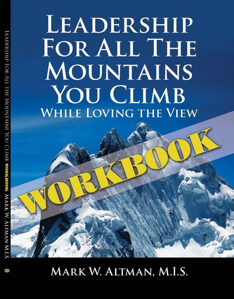
Mark Altman is a speaker and leadership consultant with the Altman Leadership Center. He has graduate work in Marriage and Family Counseling and is the author of Leadership For All the Mountains You Climb. He can be reached at mark@taolc.com.
Friday, January 23, 2009


Tuesday, January 20, 2009
To Forgive and Forget
"The weak can never forgive. Forgiveness is the attribute of the strong." -- Mahatma Gandhi
Every so often I am floored by the actions of someone else. By this I mean a story so attention getting and inspiring, I can’t help but derive a lesson from it. Usually it takes the form of a person who rises so far above themselves and the frail, flawed, nature of who we usually are as human beings, it sucks the air out of me and causes my eyes to tear with the glimpse of what we might be; both as individuals and as a species, if we could just be as Lincoln referred “our better angels” more of the time. Sometimes the person doing the punching is fictional; the author using my buy-in of the character to teach or extol. Only rarely do I get the pleasure of meeting the people who floor me, but I am always the better for the meeting.
This week I was reminded of an incredible story of forgiveness and how that story has and continues to change lives. The story is of Amy Biehl, an American Fulbright scholar killed in 1993 while serving in South Africa. After Amy was pulled from her car, then beaten and stabbed to death, her parents found the capacity to forgive the four men convicted of Amy’s killing, not opposing the amnesty ruling of the Truth and Reconciliation Commission.
Later, the Biehl’s met, and subsequently developed a relationship with, two of the men who were involved in the killing of their daughter. Today both men work for the foundation Amy’s parents started in an effort to use art, economic development, music and sports to continue to work for peace in South Africa. In fact, in accordance with African culture and morays, the two men call the Biehl’s their parents, and during the writing of one article Mrs. Biehl actually went with one of the men to buy a car seat for the man’s young daughter. I am sure I do not have the strength to forgive the killers of one of my family members; my acknowledgement of my weakness only serves to raise my admiration of the Biehls.
In our daily lives, often we are offended by slights big and small; such as when someone cuts us off while driving, or is curt with us in the grocery store. Our inclination is to respond with rudeness for rudeness, insult for insult, temper for temper. Society tends to hold up the person with the biting, quick wit who bests such people in verbal combat and our media entertainment includes the heroism of those who use physical abuse to pay pain for pain.
This is bad enough, but this treatment extends to our marital and familial relationships as well. Because we live with these people, we can think about a stinging retort for the next time we are together. If this damage is not held in check then our loved ones look for a retort of their own and sometimes the capacity to forgive these injuries is larger than we can generate, resulting in permanent damage to these special relationships.
My aim is not to preach or point out the fact that we are all at times, all too human. My fervent hope is these extraordinary stories of forgiveness, love and tolerance will give us pause the next time someone, stranger or loved one, causes us pain; and in spite of ourselves we will find the strength to become, if only for that moment, our better angels.
Mark Altman is a speaker and leadership consultant with the Altman Leadership Center. He has graduate work in Marriage and Family Counseling and is the author of Leadership For All the Mountains You Climb. He can be reached at mark@taolc.com.
Every so often I am floored by the actions of someone else. By this I mean a story so attention getting and inspiring, I can’t help but derive a lesson from it. Usually it takes the form of a person who rises so far above themselves and the frail, flawed, nature of who we usually are as human beings, it sucks the air out of me and causes my eyes to tear with the glimpse of what we might be; both as individuals and as a species, if we could just be as Lincoln referred “our better angels” more of the time. Sometimes the person doing the punching is fictional; the author using my buy-in of the character to teach or extol. Only rarely do I get the pleasure of meeting the people who floor me, but I am always the better for the meeting.
This week I was reminded of an incredible story of forgiveness and how that story has and continues to change lives. The story is of Amy Biehl, an American Fulbright scholar killed in 1993 while serving in South Africa. After Amy was pulled from her car, then beaten and stabbed to death, her parents found the capacity to forgive the four men convicted of Amy’s killing, not opposing the amnesty ruling of the Truth and Reconciliation Commission.
Later, the Biehl’s met, and subsequently developed a relationship with, two of the men who were involved in the killing of their daughter. Today both men work for the foundation Amy’s parents started in an effort to use art, economic development, music and sports to continue to work for peace in South Africa. In fact, in accordance with African culture and morays, the two men call the Biehl’s their parents, and during the writing of one article Mrs. Biehl actually went with one of the men to buy a car seat for the man’s young daughter. I am sure I do not have the strength to forgive the killers of one of my family members; my acknowledgement of my weakness only serves to raise my admiration of the Biehls.
In our daily lives, often we are offended by slights big and small; such as when someone cuts us off while driving, or is curt with us in the grocery store. Our inclination is to respond with rudeness for rudeness, insult for insult, temper for temper. Society tends to hold up the person with the biting, quick wit who bests such people in verbal combat and our media entertainment includes the heroism of those who use physical abuse to pay pain for pain.
This is bad enough, but this treatment extends to our marital and familial relationships as well. Because we live with these people, we can think about a stinging retort for the next time we are together. If this damage is not held in check then our loved ones look for a retort of their own and sometimes the capacity to forgive these injuries is larger than we can generate, resulting in permanent damage to these special relationships.
My aim is not to preach or point out the fact that we are all at times, all too human. My fervent hope is these extraordinary stories of forgiveness, love and tolerance will give us pause the next time someone, stranger or loved one, causes us pain; and in spite of ourselves we will find the strength to become, if only for that moment, our better angels.
Mark Altman is a speaker and leadership consultant with the Altman Leadership Center. He has graduate work in Marriage and Family Counseling and is the author of Leadership For All the Mountains You Climb. He can be reached at mark@taolc.com.
Monday, January 5, 2009
New Year's Resolution
The end of one year and the beginning of another is traditionally a time of reflection and evaluation for most of us; this is understandable, especially once a person is old, and mature, enough to recognize the finite nature of life and the desire to accomplish certain things during that life or leave behind something to those who follow. For example, I am still deeply engaged in a search for the perfect root beer float. For those of you also engaged in this critical search; first you must put a glass mug of suitable size and heft in the freezer and secure a good quality ice cream, which is not too dense. You will also need a spoon of about tablespoon size, as you need a spoon big enough to hold both the ice cream and a bit of root beer. We had better put this on hold and get to our resolutions; if you want my recipe, email me at the address below.
I suggest making no more than three resolutions. If you try to do more than a couple at a time, you are reducing your chances of being successful at any of them. Pick one or two you believe are most pressing; working on one health and one life improvement resolution allows you to feel as though you are improving across the broader scope of your life, while still focusing deeply. In my case, I would lose weight and get in better shape, but I spill my root beer float when I get on the treadmill.
New Year’s resolutions can be framed in two ways, capitalizing on what you do well or trying to improve what you are not doing well. In the US, we tend to focus on fixing the things we aren’t doing well or want to stop, but a shortcoming of this way of looking at challenges is we become fixated on the negative. On the other hand, if you focus on capitalizing on what you do well or want to do more, then you are grounded in the positive and focusing on the good in your life.
Obviously, if you are doing something destructive to yourself or others, such as illegal drug use or abusive behavior, then getting help stopping that behavior immediately is important. However, if you are eating too much for example, but enjoy bike riding, or snowshoeing, then joining a bike riding club or taking advanced snowshoeing lessons will increase how much you engage in those activities, provide more exercise, and thereby help you lose weight. This would be an example of focusing on the positive and is called appreciative inquiry.
After you decide on your resolutions and frame them in the manner most comfortable to you, write them down! Then break up the resolution into manageable, preferably daily, bites. This helps make your resolution a habit and allows you to track success.
Tell others of your resolutions so they can support you, and surround yourself with those who will provide loving support. Make sure you kindly make suggestions to your family and friends so they know how to support you better. Be sure you are a good friend and provide them the kind of support they want in achieving their resolutions as well. If they cannot be supportive, you may have to make changes in the friends you spend time with.
Last, realize that failure is only failure when you quite trying. I do not believe this to be just a trite saying. Most smokers for example have to try four times or more before quitting smoking. Many people have to start exercising several times before it becomes a habit.
We have to leave this for now, as I have run out of room and I have to go get some root beer. Have a wonderful new year full of possibility and promise!
Mark Altman is a speaker and leadership consultant with the Altman Leadership Center. He has graduate work in Marriage and Family Counseling and is the author of Leadership For All the Mountains You Climb. He can be reached at mark@taolc.com.
Saturday, December 27, 2008
Winter Colds - A most unwelcome winter visitor
With a winter cold going through my family like a six year old through Christmas wrapping paper, I thought a column about avoiding winter sniffles and flu bugs would be a good idea. I will concede my judgment maybe clouded a bit given that I am popping cold pills like Pez. I will also concede that most of what I will write in this column is far from ground breaking medical research, and is as likely to come from your grandmother than the latest issue of the Journal of the AMA.
You can try digging a deep hermetically sealed bunker to spend each winter and attempt to avoid a cold or flu; but in addition to contracting cabin fever, you would miss out on the wonderful winter sports, and the sights of North Idaho covered in white. So, if living in a bunker is not your future, I first suggest trying to avoid hugging and kissing anyone who currently has a cold and washing your hands often in case holiday relatives ambush you. You can also help yourself before you even come out of your bunker by eating well, and getting plenty of rest.
The Chinese have a proverb that maintains, “The superior doctor prevents sickness; the mediocre doctor attends to impending sickness; the inferior doctor treats actual sickness.” I agree with this basic premise; all things considered, avoiding the cold or flu in the first place is the preferred course of action. This can be especially difficult if someone in your family has a cold and it falls to you to nurse them back to health. At the risk of being redundant, dispose of tissues immediately, wash your hands often, and limit how much you touch your face. If you share a keyboard or register at your work, make sure you disinfect the keyboard as often as possible.
Go to the Doc and get your flu shot. I know, some of you don’t believe in immunizations and truth be told I am not fired up about needles either, but there is now a flu immunization that is administered by a nasal mist. The flu can be fatal to certain populations such as the very young and the very old, so in addition to preventing yourself from feeling like Death warmed over for a few days, you will be doing something very nice for people you may never know.
Taking a multivitamin and even certain herbal supplements such as Echinacea are believed to help the body’s immune system, while green and black teas provide antioxidants. Honey can coat a scratchy throat, while menthol can help open nasal passages. In the last few years, I have read research documenting the benefits of chicken soup, stress reduction and, believe it or not, physical activity. Several of my family members are convinced that a hot toddy (comprised of a cup of hot water, a splash of lemon juice, a tablespoon of honey and a shot of whiskey) is helpful. They also maintain that in a pinch, all of the ingredients except the shot of whiskey are optional!
I wish you and yours a happy and very healthy New Year. Hopefully by following some of these ideas you will avoid the colds and flu so many of us will sniffle our way through. Of course, if you are so blessed to avoid being sick you could commiserate with us just a bit and not be so smug when we whine a bit.
Mark Altman is a speaker and leadership consultant with the Altman Leadership Center. He has graduate work in Marriage and Family Counseling and is the author of Leadership For All the Mountains You Climb. He can be reached at mark@taolc.com.
You can try digging a deep hermetically sealed bunker to spend each winter and attempt to avoid a cold or flu; but in addition to contracting cabin fever, you would miss out on the wonderful winter sports, and the sights of North Idaho covered in white. So, if living in a bunker is not your future, I first suggest trying to avoid hugging and kissing anyone who currently has a cold and washing your hands often in case holiday relatives ambush you. You can also help yourself before you even come out of your bunker by eating well, and getting plenty of rest.
The Chinese have a proverb that maintains, “The superior doctor prevents sickness; the mediocre doctor attends to impending sickness; the inferior doctor treats actual sickness.” I agree with this basic premise; all things considered, avoiding the cold or flu in the first place is the preferred course of action. This can be especially difficult if someone in your family has a cold and it falls to you to nurse them back to health. At the risk of being redundant, dispose of tissues immediately, wash your hands often, and limit how much you touch your face. If you share a keyboard or register at your work, make sure you disinfect the keyboard as often as possible.
Go to the Doc and get your flu shot. I know, some of you don’t believe in immunizations and truth be told I am not fired up about needles either, but there is now a flu immunization that is administered by a nasal mist. The flu can be fatal to certain populations such as the very young and the very old, so in addition to preventing yourself from feeling like Death warmed over for a few days, you will be doing something very nice for people you may never know.
Taking a multivitamin and even certain herbal supplements such as Echinacea are believed to help the body’s immune system, while green and black teas provide antioxidants. Honey can coat a scratchy throat, while menthol can help open nasal passages. In the last few years, I have read research documenting the benefits of chicken soup, stress reduction and, believe it or not, physical activity. Several of my family members are convinced that a hot toddy (comprised of a cup of hot water, a splash of lemon juice, a tablespoon of honey and a shot of whiskey) is helpful. They also maintain that in a pinch, all of the ingredients except the shot of whiskey are optional!
I wish you and yours a happy and very healthy New Year. Hopefully by following some of these ideas you will avoid the colds and flu so many of us will sniffle our way through. Of course, if you are so blessed to avoid being sick you could commiserate with us just a bit and not be so smug when we whine a bit.
Mark Altman is a speaker and leadership consultant with the Altman Leadership Center. He has graduate work in Marriage and Family Counseling and is the author of Leadership For All the Mountains You Climb. He can be reached at mark@taolc.com.
Friday, December 19, 2008
A Burden to Bear
The other day I had the chance to see the wonderful movie, Freedom Writers, starring Hillary Swank. This movie is about a teacher in an inner city school, Erin Gruwell, who uses a lesson about the Holocaust to begin the process of getting her students to write about their own lives and engaging in the educational process. All 150 of her students graduated High School; many have since graduated college, several are now teachers themselves and a number are actually pursuing PhDs of their own.
In this movie, Scott Glenn, Gruwell’s father makes a comment to her that is something like, “You have been blessed with a burden, how many Dad’s get to say that to their daughter’s?” While I enjoyed this movie very much and its inspirational story; I would, if I met him, have to quibble just a bit with Mr. Gruwell. His daughter is not the only daughter, or son, with a burden to bear; every parent has a child with a burden to bear.
When I say this, I am not referring to the financial and time constraints of living in the modern, western world. I am referring to the burden borne by each of us as moral and ethical persons to make our world a better place, and to alleviate the suffering of those less fortunate than us. Teaching children this lesson, like most lessons, is best done by example. Unfortunately, most of us treat this social responsibility in the same manner Churchill described our encounters with the truth, "Men occasionally stumble over the truth, but most of them pick themselves up and hurry off as if nothing had happened."
We recognize the work that needs to be done; we see it every day, in things large and small, and yet walk on by “as if nothing happened.” Research has shown time and again that a person’s resilience to life’s challenges increases as they perform service for those less fortunate that themselves. This phenomenon, and the benefits gained, hold true whether your challenges are relatively large or small. As your mother instinctively knew, “There is always someone less fortunate than you.”
Teaching your children compassion, empathy, and patience for others not only benefits those your child interacts with; it benefits you with more fully functioning family relationships, provides your child with tools they will need in the future in marriage and as a parent, and provides us all with kinder, warmer and more polite communities. Surely these benefits to ourselves is enough to motivate us all to serve others a little more.
With the holiday season in full swing and an economic crisis hanging like a cloud over our heads, many are tempted to use these as excuses to withhold help or put off performing service for others. I encourage all of us to help another person whenever help is needed; financial help, certainly when possible, but emotional help, compassion and a kind word go a long way as well and cost nothing more than a little empathy. I leave you with the wisdom of Albert Schweitzer, “It is not enough merely to exist. It's not enough to say, 'I'm earning enough to support my family. I do my work well. I'm a good father, husband, churchgoer.' That's all very well. But you must do something more. Seek always to do some good, somewhere.”
Mark Altman is a speaker and leadership consultant with the Altman Leadership Center. He has graduate work in Marriage and Family Counseling and is the author of Leadership For All the Mountains You Climb. He can be reached at mark@taolc.com.
Thursday, December 4, 2008
Time is precious, don't wish it away
Early morning a few days ago, I found myself in a deer stand with my bow, waiting for the sun to come up. For me, this time alone is a good time to think and enjoy nature. However, like most of us, I found myself being impatient and hoping time would pass more quickly. In this case, I was impatient for the sun to rise, for the day to begin with all its promise.
I was excited to know whether I would get a chance at a mature buck, but even more anxious to see the squirrels and rabbits play, and the birds visit in the tree next to me. This anxiety led me to wishing the sun would rise, the day would start, and I would realize the potential the day held. What I wasn't, was in the moment.
That moment, that time before the sun rose, on that day, will never come again. The cool, still air would be interrupted in a few precious minutes; and with a wife, four kids and a host of relatives, the rest of my day would be filled with activity I would find difficult to escape. Therefore, the minutes I was wishing away were important and deserved to be honored and enjoyed for the glory contained in them.
This early morning revelation is something I have to remind myself of often because I tend to live my life in the future, always planning and working toward the next thing. The holiday season tends to push us to wish time would pass, so the holiday hustle and stress would end, or so we can see relatives and friends with whom we don't spend enough time. To my great fortune, several years ago I read "The Book of Virtues" by William Bennett.
In that book is the story of a little boy, who like most of us, sees the glorious spring day and wishes to be playing instead of inside a classroom. He daydreams away his education for the day, and on his way home wishes the school year would end and summer would arrive. A beautiful woman approaches and offers him a silver ball with a little thread hanging out. She explains this thread is his life thread and if he desires time to move faster when he is bored or in pain, all he has to do is pull the thread. However, when he has pulled all the thread then his life is over.
He pulls the thread when he gets bored in school, when he can't wait to marry the girl of his dreams, when his kids are sick, when he is imprisoned for his political beliefs and when he has to go to war. At the end of his life when his wife is sick and he has no money for a doctor, he pulls the thread and she is gone. . . He looks down to see golden thread coming from the ball and realizes his life is nearly over and he has missed so very much, pulling that thread.
He goes back to the stream and sits on a stump and mutters about his poor luck in owning the ball. A ragged old woman appears before him and castigates him, "You silly man, you begged for the ball despite my warning and now you bemoan the loss of your life." He tells her he is sorry and he didn't realize that the bad times of his life were important and sacred too. She offers to take back the ball on the condition he never again wishes for time to pass quickly. When gratefully he agrees, he awakens as a boy, having simply fallen asleep during lessons.
I remind myself of this story anytime I find myself wishing for time to pass quickly. I hope during the stress of the holidays and what the New Year might bring you, this story brings you the lesson and solace it brings me.
Mark Altman is a speaker and leadership consultant with the Altman Leadership Center. Mark has completed graduate work in Marriage and Family Counseling and is working on a Ph.D. in Leadership studies at Texas A&M University. He is happy to speak or provide a workshop for your organization and can be reached at mark@taolc.com.
I was excited to know whether I would get a chance at a mature buck, but even more anxious to see the squirrels and rabbits play, and the birds visit in the tree next to me. This anxiety led me to wishing the sun would rise, the day would start, and I would realize the potential the day held. What I wasn't, was in the moment.
That moment, that time before the sun rose, on that day, will never come again. The cool, still air would be interrupted in a few precious minutes; and with a wife, four kids and a host of relatives, the rest of my day would be filled with activity I would find difficult to escape. Therefore, the minutes I was wishing away were important and deserved to be honored and enjoyed for the glory contained in them.
This early morning revelation is something I have to remind myself of often because I tend to live my life in the future, always planning and working toward the next thing. The holiday season tends to push us to wish time would pass, so the holiday hustle and stress would end, or so we can see relatives and friends with whom we don't spend enough time. To my great fortune, several years ago I read "The Book of Virtues" by William Bennett.
In that book is the story of a little boy, who like most of us, sees the glorious spring day and wishes to be playing instead of inside a classroom. He daydreams away his education for the day, and on his way home wishes the school year would end and summer would arrive. A beautiful woman approaches and offers him a silver ball with a little thread hanging out. She explains this thread is his life thread and if he desires time to move faster when he is bored or in pain, all he has to do is pull the thread. However, when he has pulled all the thread then his life is over.
He pulls the thread when he gets bored in school, when he can't wait to marry the girl of his dreams, when his kids are sick, when he is imprisoned for his political beliefs and when he has to go to war. At the end of his life when his wife is sick and he has no money for a doctor, he pulls the thread and she is gone. . . He looks down to see golden thread coming from the ball and realizes his life is nearly over and he has missed so very much, pulling that thread.
He goes back to the stream and sits on a stump and mutters about his poor luck in owning the ball. A ragged old woman appears before him and castigates him, "You silly man, you begged for the ball despite my warning and now you bemoan the loss of your life." He tells her he is sorry and he didn't realize that the bad times of his life were important and sacred too. She offers to take back the ball on the condition he never again wishes for time to pass quickly. When gratefully he agrees, he awakens as a boy, having simply fallen asleep during lessons.
I remind myself of this story anytime I find myself wishing for time to pass quickly. I hope during the stress of the holidays and what the New Year might bring you, this story brings you the lesson and solace it brings me.
Mark Altman is a speaker and leadership consultant with the Altman Leadership Center. Mark has completed graduate work in Marriage and Family Counseling and is working on a Ph.D. in Leadership studies at Texas A&M University. He is happy to speak or provide a workshop for your organization and can be reached at mark@taolc.com.
Friday, November 28, 2008
A Holiday Wish for My Grandmother and Yours.
We have all gotten through Thanksgiving and hopefully each of us has plenty to be thankful for again this year. And while I certainly have been blessed beyond measure again this year, I write to all of you this week with a heavy heart; my maternal grandmother is in the last stages of life in hospice care. She is the last grandparent I have still living and so there is something particularly poignant and sad for me about her passing.
Don’t get me wrong, she has had a wonderful life worth celebrating. She was happily married to my Grandfather for over fifty years until he passed away several years ago; she raised three kids and has a bushel basket full of grandkids and great grandkids. She had a career in the banking industry when women didn’t usually have careers outside the home. She traveled quite a bit, including a trip “Down Under”. However, even though she is wonderful to my family and me, this column is not just about her.
As the holidays come near I hope to encourage you to visit the elderly people you might know. This is especially important if you suspect they will be alone for much of the holiday season. Keep in mind, with everyone feeling the pinch of the economy right now, our children and elderly populations are most at risk. So, anything you can do as a family, such as visiting an elderly neighbor or an assisted living facility is always a welcome event.
You will want to call before you go to get the rules of the facility and take their suggestions as to how to proceed. For example, many of the residents have special dietary restrictions that must be adhered to if you are to bring foodstuffs. Many facilities keep their residents busy, so again call ahead to make sure you come at a time when you are not interrupting the schedule and the residents will be able to visit with you. It is precisely the human interaction that most residents crave the most.
On the other end of the age spectrum are the children of the community and like most grandmothers, children are especially dear to mine. The Children’s Village is always in need of volunteer help, toys, food items and of course financial support. You can find them on Hanley Ave. or at http://www.thechildrensvillage.org/. The work they do is invaluable to the community and a life saving influence for the children they serve.
Most of us are reminded of our social obligations around the holiday season with columnists who publish the obligatory holiday columns such as this one, but I hope to call us all to action more often than once a year, and I hope that each of you will respond in the way your talents and resources allow. I am sure it is what my grandmother, and likely yours, would want us to do.
Mark Altman is a speaker and leadership consultant with the Altman Leadership Center. Mark has completed graduate work in Marriage and Family Counseling and is working on a PhD in Leadership studies at Texas A&M University. He is happy to speak or provide a workshop for your organization and can be reached at mark@taolc.com.
Don’t get me wrong, she has had a wonderful life worth celebrating. She was happily married to my Grandfather for over fifty years until he passed away several years ago; she raised three kids and has a bushel basket full of grandkids and great grandkids. She had a career in the banking industry when women didn’t usually have careers outside the home. She traveled quite a bit, including a trip “Down Under”. However, even though she is wonderful to my family and me, this column is not just about her.
As the holidays come near I hope to encourage you to visit the elderly people you might know. This is especially important if you suspect they will be alone for much of the holiday season. Keep in mind, with everyone feeling the pinch of the economy right now, our children and elderly populations are most at risk. So, anything you can do as a family, such as visiting an elderly neighbor or an assisted living facility is always a welcome event.
You will want to call before you go to get the rules of the facility and take their suggestions as to how to proceed. For example, many of the residents have special dietary restrictions that must be adhered to if you are to bring foodstuffs. Many facilities keep their residents busy, so again call ahead to make sure you come at a time when you are not interrupting the schedule and the residents will be able to visit with you. It is precisely the human interaction that most residents crave the most.
On the other end of the age spectrum are the children of the community and like most grandmothers, children are especially dear to mine. The Children’s Village is always in need of volunteer help, toys, food items and of course financial support. You can find them on Hanley Ave. or at http://www.thechildrensvillage.org/. The work they do is invaluable to the community and a life saving influence for the children they serve.
Most of us are reminded of our social obligations around the holiday season with columnists who publish the obligatory holiday columns such as this one, but I hope to call us all to action more often than once a year, and I hope that each of you will respond in the way your talents and resources allow. I am sure it is what my grandmother, and likely yours, would want us to do.
Mark Altman is a speaker and leadership consultant with the Altman Leadership Center. Mark has completed graduate work in Marriage and Family Counseling and is working on a PhD in Leadership studies at Texas A&M University. He is happy to speak or provide a workshop for your organization and can be reached at mark@taolc.com.
Sunday, November 23, 2008
Holiday relatives are coming back!
We are getting closer to that wonderful, dreadful, time of year called the Holiday Season. This time of year typically is thought of as beginning at Thanksgiving and ending with the beginning of the New Year. Some believe this month long trial by fire is rigged by Santa to lessen the number of good boys and girls he has to visit every year. Ok, I admit it, it’s only me that believes it; however, I hope you will agree it is a conspiracy theory that has as much merit as any other.
Last year I published a guide to not only survive the holiday season, but actually enjoy the time with family, and come to the New Year admitting those crazy people really are related to you and not just some unfortunate clerical error at the hospital. I am going to print a reminder of the guide and add a couple of points to build upon the wonderful progress we all made last year.
The first thing to keep in mind is to set reasonable expectations for the holiday gatherings. If your family resembles a 3D version of Bart and Homer Simpson during the year, it is highly unlikely you will function like the Huxtables, or George Bailey’s wonderful holiday family. Stress and proximity tend to cause old wounds to open, not help them heal; but, if you can manage your expectations then at least you may experience less stress. While it may be a tempting thought, more eggnog is not usually the healthiest answer to holiday family challenges.
If you have children coming home from college, remember to negotiate expectations in advance such as: plans over the holidays, bringing home boy/girlfriends, visiting friends, household rules such as curfew, also try to discuss grades beforehand so there are no ugly holiday surprises.
Celebrate in a location that makes life as easy as possible for the majority of members. If someone finds it difficult to travel because of pregnancy, infirmity or illness, try to bring the gathering to him or her. Just because the gathering is in one member’s home, doesn’t mean they have to do the majority (or any) of the cooking.
While on the subject of cooking, if you have special dietary needs or wants, don’t expect the hosts to provide for your situation. If you are diabetic or vegetarian, bring your favorite dish with a little extra so others may try it as well.
If you are the host, invite a stranger to the gathering. By inviting a friend to the occasion who has nowhere else to go, you prevent them from spending the holiday alone and can add a complementary personality flavor to the kitchen flavors, while sometimes bringing family members together as they make the guest feel welcome.
Learn to ask for, and accept, help! If you are kept prisoner in the kitchen, then not only are you run ragged and can’t spend time with family; they do not get to spend time with you either. Everyone from children, to adults not cooking, can do chores like set and clear the table or do dishes.
Last, try to think of “the other” first when making decisions or before getting angry when your expectations aren’t met. Whether “the other” is your parent, your child, your spouse, sibling or an ex-spouse, try to put their needs first without resentment, but with patience and a sense of love. You may find the feelings reciprocated, but even if you don’t, you will have found the true meaning of the holiday season.
Mark Altman is a speaker and leadership consultant with the Altman Leadership Center. He has graduate work in Marriage and Family Counseling and is the author of Leadership For All the Mountains You Climb. He can be reached at mark@taolc.com.
Last year I published a guide to not only survive the holiday season, but actually enjoy the time with family, and come to the New Year admitting those crazy people really are related to you and not just some unfortunate clerical error at the hospital. I am going to print a reminder of the guide and add a couple of points to build upon the wonderful progress we all made last year.
The first thing to keep in mind is to set reasonable expectations for the holiday gatherings. If your family resembles a 3D version of Bart and Homer Simpson during the year, it is highly unlikely you will function like the Huxtables, or George Bailey’s wonderful holiday family. Stress and proximity tend to cause old wounds to open, not help them heal; but, if you can manage your expectations then at least you may experience less stress. While it may be a tempting thought, more eggnog is not usually the healthiest answer to holiday family challenges.
If you have children coming home from college, remember to negotiate expectations in advance such as: plans over the holidays, bringing home boy/girlfriends, visiting friends, household rules such as curfew, also try to discuss grades beforehand so there are no ugly holiday surprises.
Celebrate in a location that makes life as easy as possible for the majority of members. If someone finds it difficult to travel because of pregnancy, infirmity or illness, try to bring the gathering to him or her. Just because the gathering is in one member’s home, doesn’t mean they have to do the majority (or any) of the cooking.
While on the subject of cooking, if you have special dietary needs or wants, don’t expect the hosts to provide for your situation. If you are diabetic or vegetarian, bring your favorite dish with a little extra so others may try it as well.
If you are the host, invite a stranger to the gathering. By inviting a friend to the occasion who has nowhere else to go, you prevent them from spending the holiday alone and can add a complementary personality flavor to the kitchen flavors, while sometimes bringing family members together as they make the guest feel welcome.
Learn to ask for, and accept, help! If you are kept prisoner in the kitchen, then not only are you run ragged and can’t spend time with family; they do not get to spend time with you either. Everyone from children, to adults not cooking, can do chores like set and clear the table or do dishes.
Last, try to think of “the other” first when making decisions or before getting angry when your expectations aren’t met. Whether “the other” is your parent, your child, your spouse, sibling or an ex-spouse, try to put their needs first without resentment, but with patience and a sense of love. You may find the feelings reciprocated, but even if you don’t, you will have found the true meaning of the holiday season.
Mark Altman is a speaker and leadership consultant with the Altman Leadership Center. He has graduate work in Marriage and Family Counseling and is the author of Leadership For All the Mountains You Climb. He can be reached at mark@taolc.com.
Tuesday, November 18, 2008
Teens and the "Idiot Box"
Two weeks ago the Rand Corporation released a study showing that teens who watch racy shows are twice as likely to become pregnant or be responsible for a pregnancy over the next three years. Researchers rightly point out, the reasons for teen pregnancy are both diverse and complex and therefore have no single determining factor as to which kids will get pregnant and which won’t. However, the kids who watched the most sexual content on TV were twice as likely to be involved in a pregnancy as the kids who watched the least sexual content.
A different study conducted several years ago by some of the same researchers, indicated that kids who watched sexual content on TV had sex at earlier ages. You might be tempted to think the solution is simple: limit or eliminate the TV sexual content teens see. Of course, this solution doesn’t take into account the sexual content teens are exposed to on the Internet, in magazines, music and movies and ignores the technical challenges and Constitutional concerns in limiting such content for kids while not interfering with rights of the general public.
Researchers point out that another aspect of media depictions of sexuality is those depictions are not realistic. For example, all media formats are notoriously silent on the consequences of sex such as diseases, pregnancy and the moral implications. The limited information available is either wrong or not in keeping with the message parents would like to send.
For these reasons, the authors are not calling upon any particular TV show, channel or network to be held accountable. Instead, they believe more realistic plotlines, and frank discussions of consequences will be of greater benefit to both parents and their teens.
Kids today have greater success of information than at any time in human history. Compounding this phenomenon is the fact that kids are maturing earlier physically, but later socially. Menarche is occurring sooner for girls, but they marry later. For boys, puberty is sooner, but the age they are expected to enter the work force is later for most. The place where these factors collide is where this problem lives.
In our own family, now that we have teenagers, we have found success in monitoring what the kids watch; not to limit any particular programming, but to know what they are watching in an effort to be able to have frank, sometimes uncomfortable, discussions. We have found it to be far more important to ask their opinion of these situations, listen carefully, and then ask other questions to allow them to discover answers for themselves. Lectures, especially lectures disconnected to their reality are of little perceived value and probably limited real value as well. To use this method a parent must be confident in their values system and their ability to discuss it intelligently.
As parents, there is an attraction to shielding our kids from depictions of explicit sex, violence or drug use; much in the same way that I am not ready to have the kids start dating. However in the case of dating, my wife’s wisdom is prevailing. She points out that if they are dating for a couple of years while living at home, then we can guide them through the process; but if they were to wait until after they are married (my favorite option), then we would not be there to help them be successful.
Mark Altman is a speaker and leadership consultant with the Altman Leadership Center. Mark has completed graduate work in Marriage and Family Counseling and is working on a PhD in Leadership studies at Texas A&M University. He is happy to speak or provide a workshop for your organization and can be reached at mark@taolc.com.
Thursday, November 6, 2008
Rx for a sick Nation
As I am writing my column I am watching the election coverage to determine who our next President will be. It is worth noting that by the time this column publishes we will know who that person will be, likely the nation will have begun to accept the will of the people and I hope we will have largely moved together to tackle our nation’s problems. The problem of the economy will likely be the first problem touching American families the new President will have to address, and an important part of this problem is that of affordable health insurance.
According to the U.S. Census Bureau Idaho has 213,000 people, or 14.7 percent of its population were uninsured in 2004-5. The nation as a whole has 45.7 million without health insurance and many of those are children and the elderly. If you believe this is bad news, then the worse news: these numbers are pre-economic downturn and we don’t have numbers after the downturn.
Like most policy decisions, this one has numerous facets with many stakeholders and each of the facets of the problem can lead to any number of unintended consequences. Lack of health care for children for example, feeds a number of problems such as avoidable illness, higher medical bills for ailments that aren’t caught early, and lower academic performance in school.
Part of the challenge for policy makers is medical science itself. On the one hand we live longer than ever before in human history, and on the other the medical costs for procedures is higher than ever. American companies, trying to increase profits so stockholders do not take investment monies to countries where health care costs are much less (partly because companies are not expected to provide employee health care benefits), are decreasing benefits. We now have medical procedures that can heal problems that certainly would have been fatal even 25 years ago.
Some of the debates the new President will have to judge are, “As a society, what resources are we morally and ethically obligated to commit in order to lengthen a lifespan?” Connected to that question is, “What resources do we commit to early detection and preventative care?” Last, “To what ends can society demand its citizens take care of themselves?” “Do we continue to make smoking harder and harder to do through taxation and limiting where people can smoke?” “Should we “punish” drinking and poor dietary habits?” “Do we mandate physicals for school age children as we do immunization?”
We have had more political participation in this election than in almost any other in the nation’s history. However, the new President, whichever candidate wins, will need the help of an educated, engaged, populace interested in solving the challenges like this one that have no easy answers. Please stay excited and involved by writing your political officials and attending town halls and meetings, making your feelings known. Your family’s medical and financial health and the nation’s economic well-being depend on it.
Mark Altman is a speaker and leadership consultant with the Altman Leadership Center. Mark has completed graduate work in Marriage and Family Counseling and is working on a PhD in Leadership studies at Texas A&M University. He is happy to speak or provide a workshop for your organization and can be reached at mark@taolc.com.
According to the U.S. Census Bureau Idaho has 213,000 people, or 14.7 percent of its population were uninsured in 2004-5. The nation as a whole has 45.7 million without health insurance and many of those are children and the elderly. If you believe this is bad news, then the worse news: these numbers are pre-economic downturn and we don’t have numbers after the downturn.
Like most policy decisions, this one has numerous facets with many stakeholders and each of the facets of the problem can lead to any number of unintended consequences. Lack of health care for children for example, feeds a number of problems such as avoidable illness, higher medical bills for ailments that aren’t caught early, and lower academic performance in school.
Part of the challenge for policy makers is medical science itself. On the one hand we live longer than ever before in human history, and on the other the medical costs for procedures is higher than ever. American companies, trying to increase profits so stockholders do not take investment monies to countries where health care costs are much less (partly because companies are not expected to provide employee health care benefits), are decreasing benefits. We now have medical procedures that can heal problems that certainly would have been fatal even 25 years ago.
Some of the debates the new President will have to judge are, “As a society, what resources are we morally and ethically obligated to commit in order to lengthen a lifespan?” Connected to that question is, “What resources do we commit to early detection and preventative care?” Last, “To what ends can society demand its citizens take care of themselves?” “Do we continue to make smoking harder and harder to do through taxation and limiting where people can smoke?” “Should we “punish” drinking and poor dietary habits?” “Do we mandate physicals for school age children as we do immunization?”
We have had more political participation in this election than in almost any other in the nation’s history. However, the new President, whichever candidate wins, will need the help of an educated, engaged, populace interested in solving the challenges like this one that have no easy answers. Please stay excited and involved by writing your political officials and attending town halls and meetings, making your feelings known. Your family’s medical and financial health and the nation’s economic well-being depend on it.
Mark Altman is a speaker and leadership consultant with the Altman Leadership Center. Mark has completed graduate work in Marriage and Family Counseling and is working on a PhD in Leadership studies at Texas A&M University. He is happy to speak or provide a workshop for your organization and can be reached at mark@taolc.com.
Subscribe to:
Posts (Atom)




 Posts
Posts


